Google+ bakers and astronauts: books
Showing posts with label books. Show all posts

13 March 2013

New to me Books (and why I chose them)

I love books.  New books, used books, antique books, children's books, novels, cookbooks - you name it.  We have moved quite a bit over the years and I think my book collection has been a reason that my husband HATES moving.  I'm not strong enough to pick up a box with 60 picture books, so that work falls on him and generous (and muscular) friends!  But we moved again a few weeks ago, and I have been so good about not buying books this past year, knowing our housing was relatively temporary.  But we've settled in, and I'm adding to my collection!

There was a library book sale, and I got lucky.  I had a $10 bill, and these books are just a part of what I walked away with (I'll be sharing the other half of my treasures soon)!


I'd like to share why I bought the books that I did.  There are so many books out there, and so many are not worth our time.  But wonderful books are so wonderful, they are like having 25 mediocre books.  And so...
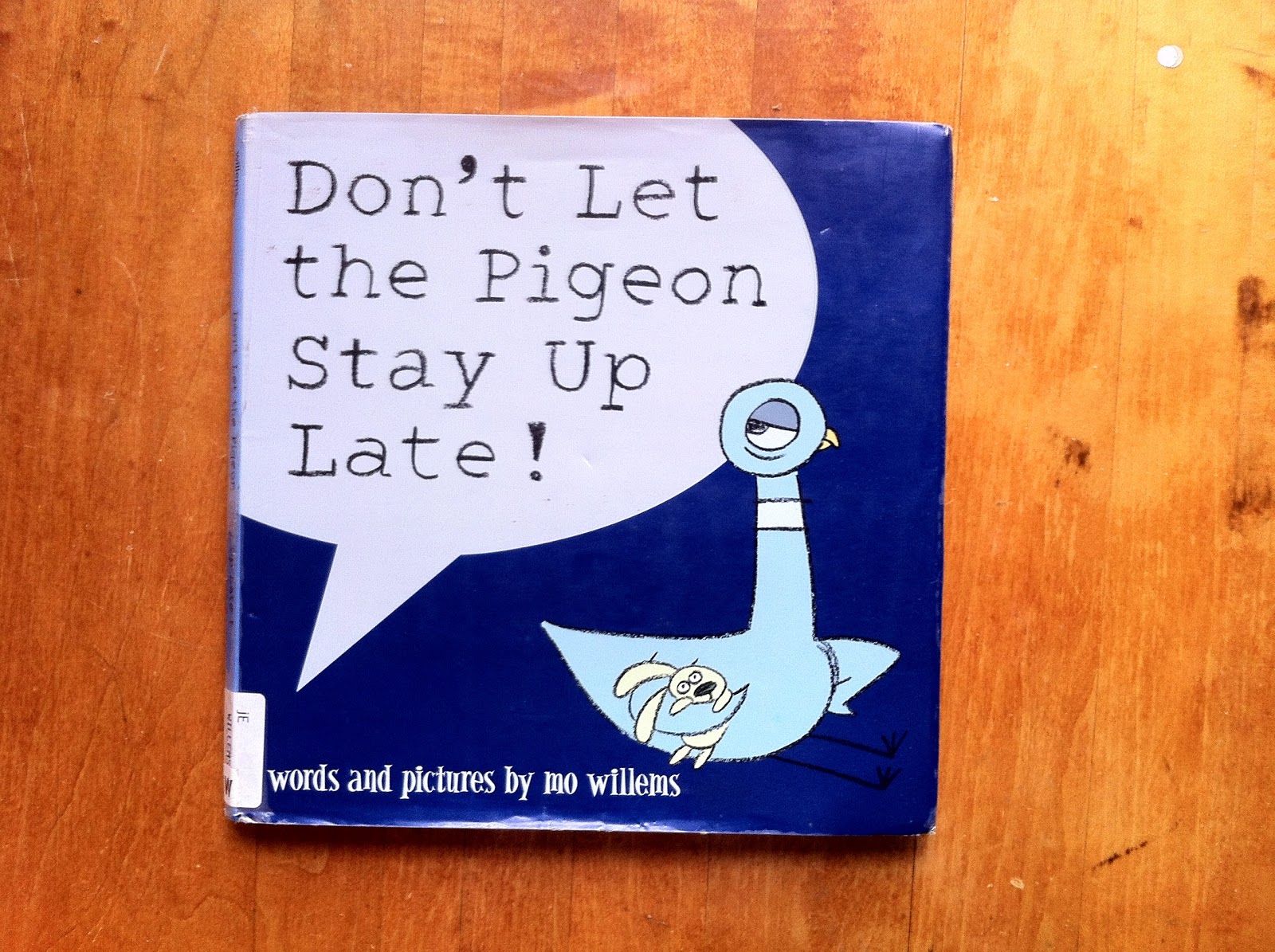


Don't Let the Pigeon Stay Up Late! by Mo Willems is the Mo Willems book I bought because it was the only one there.  I already own Don't Let the Pigeon Drive the Bus!, and it is a favorite of mine to use with preschoolers because it is so easy for children to interact with, and they often choose to read it to themselves.  This is a crucial step in early literacy - children retelling stories using bold and memorable images.  I also love the use of text boxes in this series, and in all of Mo Willems books.  I don't own any Elephant and Piggie books, but if there had been any at that book sale, they would currently be in my possession.


Herman and Marguerite is one of my favorite audio stories from Jay O'Callahan, and I had no idea that it was a picture book as well, with illustrations by his daughter.  I encourage you to listen to him tell a story - not Herman and Marguerite, but another excellent one - to appreciate him.  I don't think this book is in print, but you can find it on Earth Stories, and you can find it used on Amazon.  Rest time in your classroom will be amazing with Jay O'Callahan in charge.


Paper, Ink and Roller was not necessarily any new information about printmaking, but it is nice to have images of the tools and processes for a little inspiration from time to time.  I can also imagining showing this to children and having them choose printmaking techniques that interest them.


Boing! is a picture book that has interesting illustrations, and stars an accessible superhero.  That has early childhood written all over it to me.


The Crane Maiden is a retelling of the Crane Wife, a Japanese folktale.  The illustrations are beautiful, and in my opinion, the more fairy and folk tales I have around the better.  It doesn't hurt that The Decemberists wrote beautiful songs that are based on this story.  This is an example of a story that has been told many ways, and having a collection of a few to compare and contrast would be a great conversation starter.


Nina Crews' High, Low, Near, Far, Quiet Story is a fantastic book that uses photography to illustrate different concepts.  But Crews does this without making it too simple - she uses photographs that children can relate to and talk about.  I have a soft spot for Tana Hoban, so it is not hard for Nina Crews to wiggle her way in!


Finally, Audrey and Don Wood's retelling of Heckedy Peg.  What a book!  The illustrations are gorgeous and interesting (see a theme amongst these books?), and the story of Heckedy Peg is like the mother of all fairy tales for children to see and hear.  There is a creepy witch who scares children and turns them into food - that is some serious drama for kids!  It is a bit dark, and you may need to cuddle during the first reading, but then Heckedy Peg will be a classroom staple.


Are you familiar with any of these books?  What are your standards for the books that make it back to your house from the bookstore or library?

12 July 2012

We're Going on a Bear Hunt!


Another favorite "pretending to read" book!  I had the pleasure of seeing Michael Rosen give a keynote address in Waterloo, Belgium, a few years ago.  He is a very gifted storyteller, and I'm always inspired when I see him perform.


10 July 2012

Herve Tullet + Emerging Readers

While visiting a little shop downtown over the weekend, I came across the books of Herve Tullet, a French author and illustrator of children's books.  His books are simple and straightforward, and are books I can picture a preschooler engaging with easily.


The images do much of the talking, I think.  And in a recent series, Tullet is creating very interactive books, with textures and lines that draw a child in.  A book like that is likely to get a child's attention whether or not there is someone "reading to them".  When a child feels a certain amount of understanding of a story, we'll see them read books back to themselves; an important aspect of becoming a reader and a writer.

Herve Tullet

"having fun"


Press Hereis the perfect example of a book that a child might engage with independently.  When I think about wonderful children's books for independent exploration, I have a memory of the children in my classroom a few years ago taking turns reading Pete the Cat- this video is one of my favorite literacy moments.


Flipping through Tullet's books at that little shop downtown, and then rewatching the video, has inspired me to put together a list of great books for pretend reading.  I know that any book can inspire independent exploration and storytelling, but there are also some that really seem to speak to children in their own way.  A leveled "I Can Read" book rarely has the engaging content that draws a child in, and pretend reading is not about sounding out words - it is about understanding that text holds the same story with each retelling, that pictures and text carry information, and that text is related to spoken language.

I'm looking forward to making some book lists!  In the meantime, are there any books that you love to have around to inspire some pretend reading?


29 February 2012

Music and Games


There is something about old books that gets me, and I can't resist taking them home when they only cost 50 cents.

This book, Experiences in Music, came home with me from a thrift store in a very small town in the middle of Washington.  I feel that the preschool teaching repertoire can be a little stunted sometimes: we return to the same songs over and over again.  The classics are classic for good reason, of course.  But shaking things up, at a kid appropriate level, is important.  This book reminded me of a few songs that I had not sung with the children in a while (Frere Jacques, for example) and gave me some quick lessons in the development of singing in harmony.  That is not something we have (nor will likely) attempt, but the information is interesting nonetheless.

I came across a website months ago called Playtimes: A Century of Children's Games and Rhymes, and one song jumped out at me as one that the children might really enjoy called There Was A Lovely Princess.  

Digging a bit deeper, the motions to this playground game seem universal.  It is a circle or ring game, and the motions that the children use in the video are the same as the ones described here.  I can envision singing this song with the children, maybe using some picture cues to help us remember the words, and perhaps exploring the motions with a few children.  I have never been one for choreography with children, but this is more of a game than a performance.

I definitely recommend looking through the Playtimes website, and picking up cheap books whenever you can - you never know what discoveries might ensue.


02 February 2012

the creative (classroom)

I recently checked The Creative Family out of the library.  The author, Amanda Blake Soule, is the writer and photographer behind Soule Mama, a wildly popular blog about life and family in Maine.


I enjoyed reading it, and I think that early childhood educators, especially ones who are interested in taking a more holistic approach to education, can find useful inspiration here. A few ideas that resonated with me:

"The things we have around us and the things we see in our daily lives all greatly affect the way in which we create." (p. 29)


When we look around our centers and classrooms and schools and day cares, what do we see?  What do the children see?  What is valued by adults and children?  Its not just about the commercial items versus the natural items: t goes deeper than that.  What we present and suggest for children to use in their explorations will guide those explorations - we cannot forget that.


Soule also shares ideas on imaginative play, which you know have been at the front of my mind lately. I had a bit of a revelation when reading her suggestions for a wonderful "dress-up trunk".  She lists a few key items: scarves, hats, shoes, accessories, and makeup.  Although we might not have the makeup on a regular basis, I pictured the other items she lists presented carefully in the classroom, and I can see how children can use those.  

The kicker is that when I was growing up, we had a dress up trunk with my mother's old dresses and shoes and bags and other second-hand things.  No fancy costumes, just interesting clothes.  That is how it should be.  I feel as if I'm on a bit of a quest for the perfect prompts for imaginative play, and I'm glad to have a few reminders from this book.  


10 January 2012

How to Tell Stories to Children


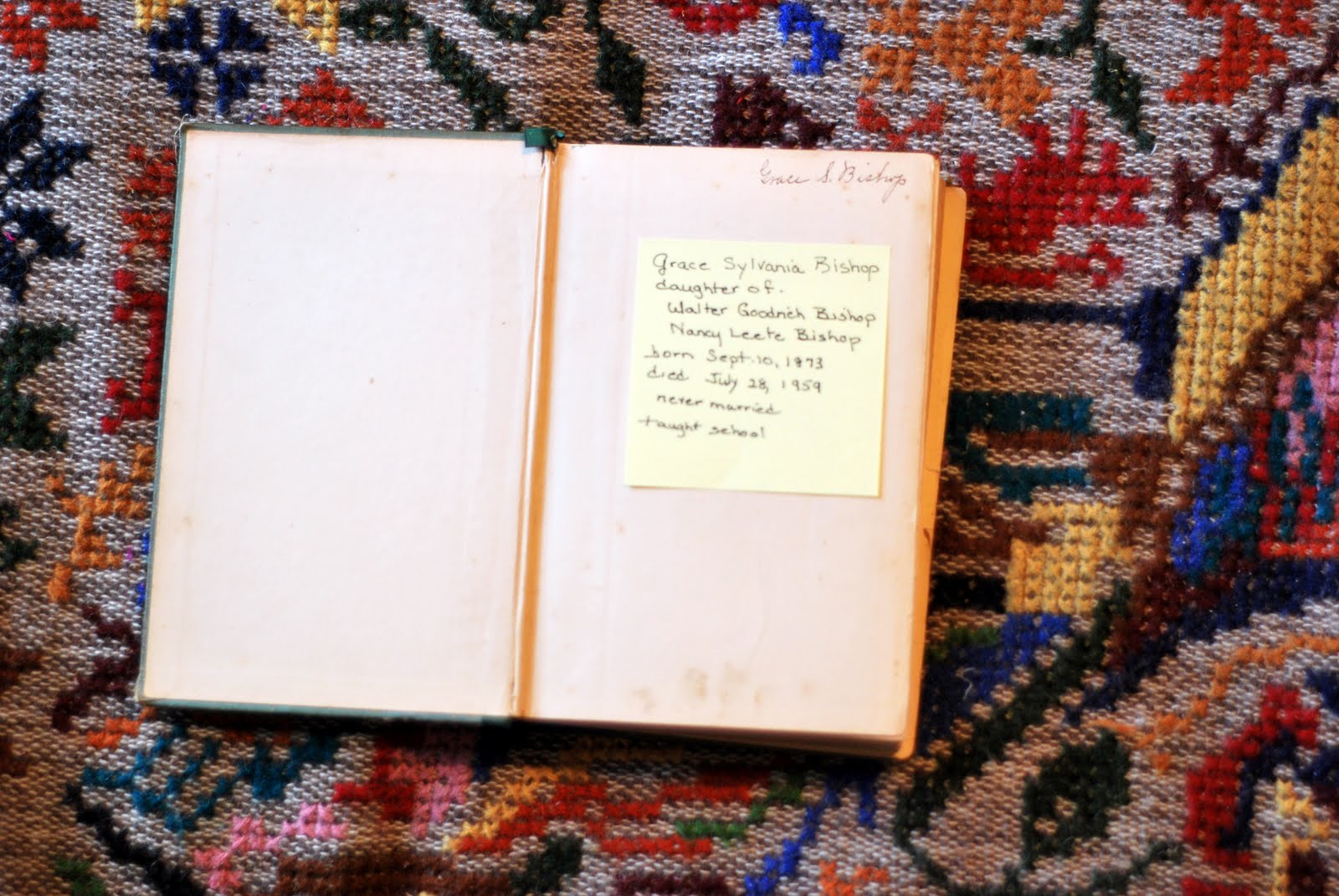
I got a very thoughtful gift from my Grandmother this holiday, and I'm excited to share a few photos and quotes.  This book is called How to Tell Stories to Children, and it was published in 1905.  The book belonged to a relative of mine 100 years ago.


I am an avid reader outside of teaching, and I loved looking through this book.  As I read about the writer's personal philosophies about storytelling and thought about why she thought it was so important, her justifications were not too different from what I, or others, see as the reasoning behind using storytelling as a tool in the classroom.


"...storytelling is first of all an art of entertainment; like the stage, its immediate purpose is the pleasure of the hearer,  -- his pleasure, not his instruction, first."


The book is mainly focused on the art of oral storytelling.  So many of us encourage children to tell us stories - to dictate stories, to write their own stories - but I know that in my case, the stories that I tell are usually in picture books.  There are often anecdotes and small stories, but not planned in a way for an audience.  I put a lot of energy into reading picture books and engaging children through those, but I have not attempted the oral story.  I have seen children's engagement with stories on tape during rest times, so I'm not sure why I have not considered modeling storytelling and bringing it into the classroom as a more respected art, and as a larger part of the curriculum.  One quote in particular has me thinking about storytelling as an art:

"A story is essentially and primarily a work of art, and its chief function must be sought in the line of the uses of art.  Just as the drama is capable of secondary ses, yet fails abjectly to realize its purpose when those are substituted for its real significance as a work of art, so does the story lend itself to subsidiary purposes, but claims first and most strongly to be recognized in its real significance as a work of art.  Since the drama deals with life in all its part, it can exemplify sociological theory, it can illustrate economic principle, it can even picture politics; but the drama which does these things only, has no breath of its real life in its being, and dies when the wind of popular tendency veers from it direction."


The "classics" that we know any group of children will love might be different for each of us as teachers or parents of just people who love books, but the same underlying reasons define why children like and love them year after year and want to read and reread them.  There are universal and timeless messages in those stories, and themes that children crave.  Sara Cone Bryant (the author of the book) shares that "no one can think of a child and a story without thinking of a fairy tale."  They are the perfect stories (for reasons we can delve into another day!)

The stories that I hear children tell in the classroom are not so different from fairy tales.  Even if they are about the car ride to school or a movie they saw, they are important to the children, and contain themes and ideas that are important to every children who is listening to me read a dictation or to a child reading a book they have written.  Sometimes it is more about trying literature on for size, sometimes it is about trying characters out or working though anger.  We know what children's faces look like when they are engaged, and there is no time of the day with as much full group engagement as when there is an excellent story being shared by an adult or a child.

I'm thinking a lot about the role that storytelling and imagination plays in the classroom.  Not just mine - I think there is something universal about it.


"The message of the story i the message of beauty, as effective as that message in marble or paint.  Its part in the economy of life is to give joy.  And the purpose and working of the joy is found in that quickening of the spirit which answers every perception of the truly beautiful in the arts of man.  To give joy; in and though the joy to stir and feed the life of the spirit: is this not the legitimate function of the story in education?"

09 April 2011

do not forget


I'm going through things, getting ready to ship our things back to the states.  I don't have a lot of personal teaching things, but I do have books.  These are some titles that, sadly, are not mine, and I have to leave them here for another teacher.  But I don't want to forget them, so I had to save them somehow.

25 January 2010

The Pictorial Webster's

I am thinking of Pictorial Webster's: A Visual Dictionary of Curiosities as a beautiful tool for the classroom. In the past, I have used both Zoo - ology and Almost Everything by Joelle Jolivet with children, often as a book that is available for the children to look at independently.  There is no explanation, just a picture.  I imagine this is the same for the Pictoral Dictionary.

The pictures are black and white prints, and, being a dictionary, there is a little bit of everything.

Watching the author's video on the making of the leather-bound, letterpress printed limited edition, I thought about young children and book binding.  We do some simple stapled books, and sometimes sewn books or accordion books.  The idea of making a thick book and stamping on the closed pages is interesting, I think.  I dont know if that would ever come about in the classroom, though!

The video also has me thinking about woodcuts and linocuts.  Have you ever used them in your classroom?  Where do you get your materials?

The video is worth a watch - it is a really interesting project.


24 November 2009

There Was An Old Lady


I saw this post over at Book By Its Cover, and I just have to see this book in real life.

There are a few versions of "There Was An Old Lady" that I really like and keep in the classroom, but this new version, There Was an Old Lady by Jeremy Holmes, looks a little darker and takes a new spin on the classic tale. It seems inspired by Lemony Snickett!

03 September 2009

It's not a bird yet


"Just as infants constantly practice making sounds, so young drawers fill sheets with shapes which may seem very similar. Yet when you compare markings of even only a few days apart, you will notice differences."
-ursula kolbe-

The information in It's Not a Bird Yet: The Drama of Drawing is nothing shocking or new. But Ursula Kolbe takes children's drawing experiences and slows them down, and looks at each time a child draws as a full experience.

After finishing the book, I made it a point to slow myself down a bit this week and watch and listen to drawing experiences in the classroom. At one point in the book, Kolbe talks about children as "pattern makers". That term makes me think of A-B-A-B patterns - lining up colored beads or animals. But to a child, a pattern is the label for something that repeats. So perhaps it is that A-B-A-B pattern that we have in mind, but it might be a sun with lines coming out everywhere, or vertical lines down a page over and over again. Two children were talking about patterns in the classroom on Tuesday - one was tracing flower petals onto a group mural and invited the other one: "Look at my pattern!" Her friend responded, "I love your pattern! Can I help with it?" They traced flower petals together, with a complete understanding of what the pattern was.

A second part that I felt I experienced this week was imaginative play and drawing as one. Kolbe says, "drawing...by many young children -- is about actions and events in time. It's not about making a picture of how things look." On Wednesday, one girl spent ten minutes drawing a curved shape, and then coloring it in with a crayon. While she was filling it in, she talked and sang about princesses, ghosts, parties, animals, sharks, and splashing water. Although her finished drawing was a simple shape, there was so much more to it.

I love reading a book like this. I spent a few evenings looking at the photos, reading the text, and going back to favorite sections. This is a nice book for an experienced teacher or a novice one. She comes from the point of view of an artist who loves to work with very young children, which is quite unique. Plus her work here is concentrated on one- to six-year-olds. In my school, I feel like a lot of attention is put on reading and writing for first and second graders in our center, so we don't get to talk about things like the drawings the children are making throughout the building. I'm talking about this book to the early childhood faculty on Monday, and I'm pretty sure I'll be lending my copy around for a while.

I think I'll be picking up a copy of Rapunzel's Supermarket: All about Young Children and Their Art now - that is Kolbe's first book. She really has a way of slowing down children's experiences and seeing each moment as important. And her work is really about children being children, and us watching and supporting as needed.

What are you reading right now?


29 July 2009

one page zine

This might be a nice way to change up our book making next year. I usually start with pre-made books (two half-A4 sheets, folded in half together and stapled) and then the children use their own versions of paper + staples after that. This is the same amount of paper and pages as our standard book. I've always thought about showing children new ways, but I've been pretty lazy about it.


The sequencing involved in making this one is interesting, too. I have to do it! No more laziness!

from Bloesem Kids

05 May 2009

This one is for all the library nerds.


Like me!

I love books, and I love owning wonderful books -- but I have always loved libraries. The smell of the books, the quiet, the selection -- I can spend hours and hours in a good library. The Seattle Public Library opened its central branch right before I moved there in 2004, and I visited at least once a week. One of the most brilliant things about the SPL is that you can look up books, music, and movies online, at home, put them on hold, and then they email you when your items are ready. So I may have been number 3, 287 on the waiting list for a book, but I knew it would be set aside eventually.

Perhaps you have all seen this, but it is exciting and new for me -- WorldCat is a directory of every library catalog in the world. Or the public, electronic ones, at least. None of the books I have entered are in Belgian libraries, but it will lead me to one in a surrounding area where I might want to curl up for a day.

Is your hometown library in the directory?

p.s. come back tomorrow to be in the running for the giveaway!

08 February 2009

Sandro Asatiani

I just read this post over at Book By Its Cover. It is always wonderful to see the books she finds for children -- there is always wonderful design and illustration in the ones she chooses.


But this book, by Sandro Asatiani is exceptionally beautiful to me. It is called Una Storia Incredible, and it is about a man and a woman who fall in love. The story and the drawings are simple and so beautiful. And I can see young children connecting to this story as well as adults - a must for books I share with children. I have one student in particular who is always writing books about people falling in love and "marrying". This book (and many of his others) have a universal, thoughtful message.

Browse Mr. Asatiani's books here and buy a few here.
Related Posts Plugin for WordPress, Blogger...