Google+ bakers and astronauts: storytelling
Showing posts with label storytelling. Show all posts

03 October 2012

Kid Snippets

I have been watching these Kid Snippets, and I cannot stop laughing.


As always, I can't help but think about the implications this has for Early Childhood Education.  How can we get children to use language creatively?  How an we encourage storytelling in the early years and beyond?

This almost seems like a new version of Vivian Gussin Paley's work, writing down children's story dictations and then having children dramatize them later on.  I don't think that adults doing it inhibits creativity - it probably makes the stories even more vivid for children.


Celebrating children's stories is incredibly important if we want them to be readers and writers, but I think there is also a certain confidence that comes from sharing stories and seeing the pleasure people get from good storytelling.  I'm remembering a student I had a few years ago who, at the age of four, would create books that would have children and adults in stitches!  He understood how to tell a humorous story, and he would spend all of choice time crafting them and truly looked forward to the end of the day, when we would share our stories.

I love looking back on videos of children telling me their stories - it is as informative and intriguing as watching children at play.  This is one of my favorites from a few years ago.


Do you have a creative way of supporting children's storytelling in the classroom?

10 January 2012

How to Tell Stories to Children


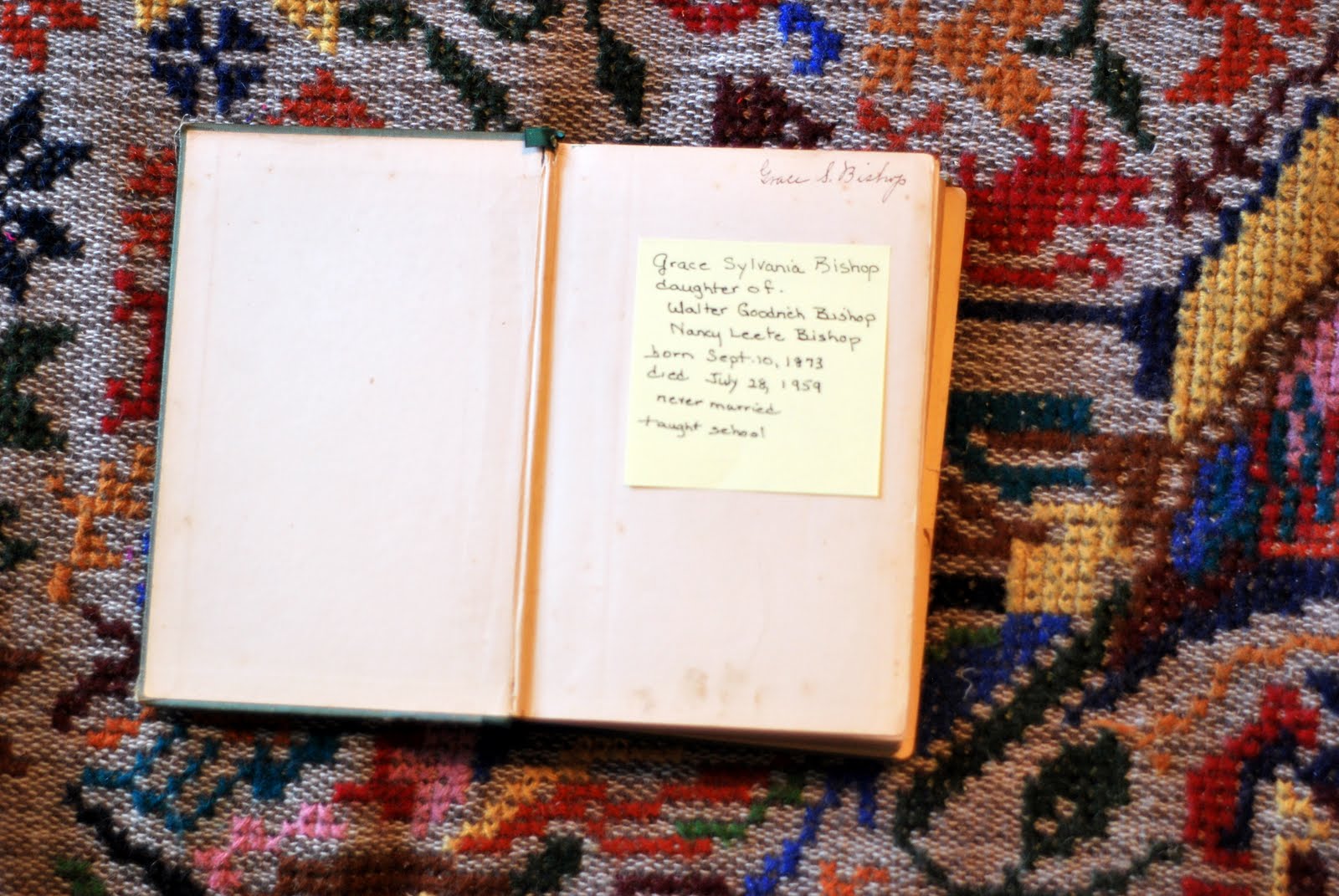
I got a very thoughtful gift from my Grandmother this holiday, and I'm excited to share a few photos and quotes.  This book is called How to Tell Stories to Children, and it was published in 1905.  The book belonged to a relative of mine 100 years ago.


I am an avid reader outside of teaching, and I loved looking through this book.  As I read about the writer's personal philosophies about storytelling and thought about why she thought it was so important, her justifications were not too different from what I, or others, see as the reasoning behind using storytelling as a tool in the classroom.


"...storytelling is first of all an art of entertainment; like the stage, its immediate purpose is the pleasure of the hearer,  -- his pleasure, not his instruction, first."


The book is mainly focused on the art of oral storytelling.  So many of us encourage children to tell us stories - to dictate stories, to write their own stories - but I know that in my case, the stories that I tell are usually in picture books.  There are often anecdotes and small stories, but not planned in a way for an audience.  I put a lot of energy into reading picture books and engaging children through those, but I have not attempted the oral story.  I have seen children's engagement with stories on tape during rest times, so I'm not sure why I have not considered modeling storytelling and bringing it into the classroom as a more respected art, and as a larger part of the curriculum.  One quote in particular has me thinking about storytelling as an art:

"A story is essentially and primarily a work of art, and its chief function must be sought in the line of the uses of art.  Just as the drama is capable of secondary ses, yet fails abjectly to realize its purpose when those are substituted for its real significance as a work of art, so does the story lend itself to subsidiary purposes, but claims first and most strongly to be recognized in its real significance as a work of art.  Since the drama deals with life in all its part, it can exemplify sociological theory, it can illustrate economic principle, it can even picture politics; but the drama which does these things only, has no breath of its real life in its being, and dies when the wind of popular tendency veers from it direction."


The "classics" that we know any group of children will love might be different for each of us as teachers or parents of just people who love books, but the same underlying reasons define why children like and love them year after year and want to read and reread them.  There are universal and timeless messages in those stories, and themes that children crave.  Sara Cone Bryant (the author of the book) shares that "no one can think of a child and a story without thinking of a fairy tale."  They are the perfect stories (for reasons we can delve into another day!)

The stories that I hear children tell in the classroom are not so different from fairy tales.  Even if they are about the car ride to school or a movie they saw, they are important to the children, and contain themes and ideas that are important to every children who is listening to me read a dictation or to a child reading a book they have written.  Sometimes it is more about trying literature on for size, sometimes it is about trying characters out or working though anger.  We know what children's faces look like when they are engaged, and there is no time of the day with as much full group engagement as when there is an excellent story being shared by an adult or a child.

I'm thinking a lot about the role that storytelling and imagination plays in the classroom.  Not just mine - I think there is something universal about it.


"The message of the story i the message of beauty, as effective as that message in marble or paint.  Its part in the economy of life is to give joy.  And the purpose and working of the joy is found in that quickening of the spirit which answers every perception of the truly beautiful in the arts of man.  To give joy; in and though the joy to stir and feed the life of the spirit: is this not the legitimate function of the story in education?"

11 June 2011

More stories


I love this story because it is about the whole world of stories.  E adds these little pieces from stories she has heard, like the line "Every day, she did".  The picture is a big inspiration for the words, and she incorporates so many aspects of it into the story.  (Side note: scrap paper from the bin in the copy room is more inspirational to the kids than regular paper.)  In the end it doesn't matter if the events in her story are connected or not; it matters that she is a storyteller.  And that ending, "He crept into his house, and set off" - someone is hearing all kinds of stories.  I love it.

With just two weeks left in the school year, the stories are pouring out and it is unstoppable.  Someone cried on Thursday because I said we had to go home and all of the Moms were waiting and he couldn't read his story - and the children agreed that it was more important for M to read his story than for us to be on time.  Amazing.  And it was an excellent, dinosaur filled end to our Thursday.

I hope that this trend means more stories to share here - I'm finding that it is one of my absolute favorite parts of preschool.  Besides the spontaneous break dancing session that P showed us on Friday.  And I got all excited about the possibility of a dance project and exploring the different kinds of dance with our bodies, clay, painting, stories, music - whew!  That has to happen somewhere, someday.

08 June 2011

Storytelling Inspiration

I just came across this blog post about Hoxton Street Monster Supplies in London.  This really seems like a wonderful way to promote the young writer's imagination.

Inspired by 826 Valencia and founded by Nick Hornby, the Ministry of Stories runs the monster supply shop as an inspiration for writers.  Volunteer teachers and writers mentor young writers at the Ministry of Stories.  A lovely quote from their website:  "The best results are achieved by making writing seriously playful".

I love storytelling in the classroom and the way that young children's imaginations create stories, combining their experiences in real life with stories they have heard and their own fantastic ideas and word explorations.  It makes me wonder - why does 826 only start working with children from the age of six, and why does the Ministry of Stories only start working with children from eight?

Teachers of young children promote writing in different ways, trying to spark creativity.  Some take down children's dictation in the form of oral stories and then read them aloud again to the children.  Some write the children's words down on a picture that the child has drawn and then talks about.  In the past few years, I have been providing pre-made books that the children write and draw their stories in, and then they read their books at the end of the day to the class (if they want).  I try to pull children aside to read them to me, also, so I can get a preview.  I'm also really interested in the way that some children keep the same story - sometimes verbatim - every time they read.  Other children make a story up as they go along and change it each time.  I find that is most common when the children make marks or shapes on the pages that are not meant to be "something" - they often write stories for the pleasure of getting up in front of the class and sharing.  I obviously can't make these generalizations about all children - this is how writing works with the children I work with right now.

Below is a story from today - this is the very youngest student in the class, 4 years and 2 months old.  She read the story again later, to a friend, and she told it just the same.  Tomorrow she'll be sharing it with the class, and I'm interested to find out if it stays the same or changes.

02 May 2011


I can never get enough of the storytelling. Every child brings something new to the process, and tells a story I never could have imagined.

29 September 2010

Loose Parts

I want to share a clip from the classroom today.  The children are begining to wander over to the windowsill and use the pieces that they find.  Earlier in the week, pieces were combining with blocks, which is also interesting.  But this video here shows a miniaturized dramatic play, and even includes that popular phrase, "It's morning!"

There will always be a fascination with going to bed and getting up in the morning, I think, no matter where I teach four-year-olds.

27 May 2010

A New Story Collaboration

The children dictated this story as a group today.  It includes so many of the popular themes from this year: princesses, fairy tales, action, and people saying "no" when you ask them to play.


Robin and Katie
Robin and Katie go to forest and they see what’s happening.  The dragons come!  Then, they kill the dragon.  They saw a fair, and so they went to it.  They rode on golden horses, and then they got lollies and strawberries.
Then Katie was all alone – she was driving all alone and then she crashed in a car and she hurt herself. 
Then Robin turned to a Princess, and Cinderella come.  They found a fairy.  The fairy flew with Cinderella.  Then, the horses came back and the Princess came back.  Then, Robin and Katie saw another princess and they wanted to play with her, but she said no because she was going to her house.  And then she found a princess and she say, “Can I play with you?”  And she said no.
Robin and Katie find each other again, and Robin is find Cinderella.  Cinderella said, “What’s going on?” and Robin said, “Nothing.”
Then, there was a tree and the tree bite the fairy, and then she’s gone!  Then Katie turned to a princess and then Cinderella was to the mean fairy to be killed.  The horses changed to princesses. 
And then Robin was be happy ever after with Cinderella and Katie, too.  Snow White is come and say to Robin, “What’s happening?  Something’s happening.  Trees eat me!”
The End
Related Posts Plugin for WordPress, Blogger...