Google+ bakers and astronauts: open-ended
Showing posts with label open-ended. Show all posts

20 July 2013

Generations at Play


This photo embodies one of the things I love most about Play Lab events.  Of the three Play Labs so far, only once have I seen a parent sit on the side.  Seeing children so thoroughly engaged in a creative tasks seems to draw the parents in as well, and I find myself surrounded by happy pairs at play.  The materials and prompts encourage interaction from the children, yes, but I think the adults are intrigued by the possibilities presented by the materials.  


In a world filled with toys that are meant to be used in specific ways and classrooms where specific tasks are designed to create a specific product, play is refreshing.

06 June 2013

Evidence of Play

In this little corner of the farm, there are wood chips on the edge of some blackberry bushes.  Nothing too special to the naked eye, really.  But go ahead - look closer.


Untitled


Some wood chips in less-than-natural positions drew my eye in. A few standing in a row made me think that maybe someone sat for a few minutes, fiddling with some found things.


Untitled


I walked closer to get a better look and saw some serious evidence of open-ended, self-directed play.


Untitled


Untitled


Untitled


And to top off these little structures, there was some writing, asking unassuming guests not to disturb these creations, because the play isn't done.  So much more can happen!


Untitled


I promise, I won't.  But I'm looking forward to heading to the farm next Thursday and seeing what has happened to this little world under the blackberry bushes.


25 October 2012

12 March 2012

Art Dice, Drawing Practice


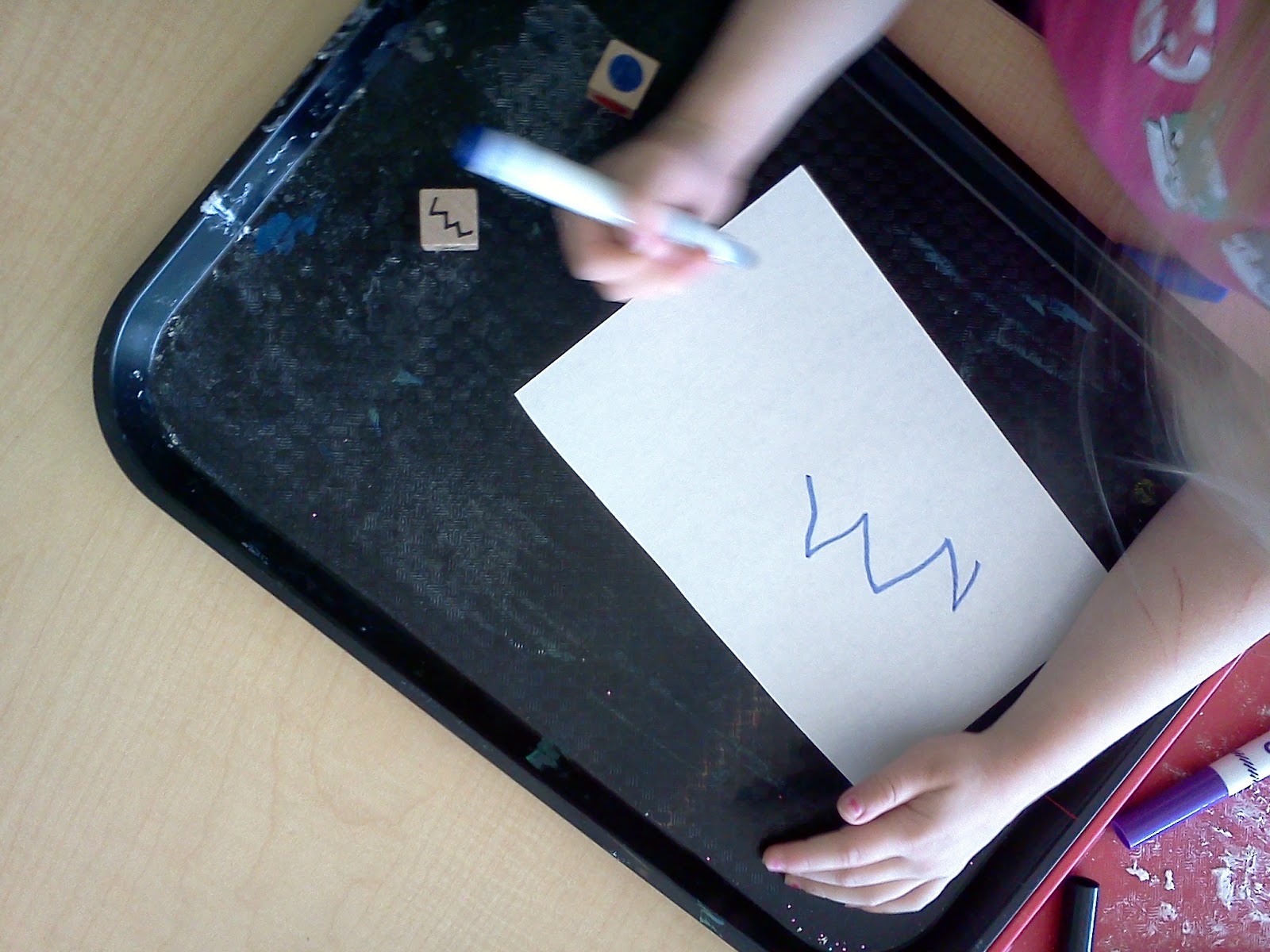
The children loved playing with art dice last week.  Pretty self-explanatory!  The idea originally came from Tinkerlab.

There are so many possibilities for these little wooden cubes: I'm imagining a game where the dice have different facial features drawn on and they make a monster face, and a second die has numbers to prompt how many of the facial feature to draw.  While we were working I thought about using these dice to make  maps, with lines to represent roads, for example.  

So simple, and so fun!

27 February 2012

Little Paintings

Last Thursday, I cut some painting paper into quarters and took out little pots of paint and thin paintbrushes. I've been feeling a little uninspired at the maker's table lately, and watching the children do little paintings was just what I needed.


I feel like I had forgotten all of the things that I would bring to that table and for a few weeks, it was play dough, crayons, group collage, group painting...I was unable to think of what would really engage children at that table.  I hope this means the rut is over: I've planned truly inviting activities for all of this week.  It can be a challenge to be open-ended and provide novelty with materials and aesthetics that really draw the children in.

This particular way of painting makes children look at the paper differently, I think:  that paper is so small compared to what they would typically work with; same goes for the brush and the paint pots.  Making little changes can result in a big change in engagement, and as I've mentioned too many times to count, engagement is always my goal.

Do you ever feel stuck in a rut with your planning?

08 February 2012

map embellishments


Pipe cleaners allowed us to add three dimensional aspects to the treasure maps we started yesterday.  By the end of the morning, the maps had bridges, tunnels, slides, giants, and "the Coast Guard thing".

J explained the work he was doing:


Where will maps take us next?  What other materials will we add?  How can we use these maps?

07 February 2012

treasures and pirates

Today at the maker's table, the children worked on a treasure map.  We had the paper strips, tape, crayons, and markers to work with.  When we gathered together in the morning, I told the children that we should try to make a map using those things, and I asked what they knew about maps. Conversation immediately turned to pirates and treasure.  Three children started out helping with the map and they stayed for about 10 minutes, adding the features in the pictures below.  There were also chipmunks, babies, and cords added.  


taping down roads


adding new kinds of roads


more roads, an ocean, and an airport


making pirates


and adding them to the treasure map.

I chose this prompt because of some map-making I've seen here and there online lately, and also because of the interest the children have in using a map during dramatic play.  It has been a challenge for me to document and make connections across days and weeks in this setting, but explorations like this seem really positive because the children engage in something very open-ended, and I learn a lot about them as they talk and work.  Our plan is to add to it tomorrow - the tape was a hit, but we'll also offer more materials, and do more to get conversation started about what this map can be for.


01 February 2012

Sculpting Again

On Tuesday, there was a simple prompt on the Maker's table: two lengths of fishing wire attached to the ceiling and then down to the table, taped into place.  I strung a length of pipe cleaners between the two fishing wires to send the message:  Let's put pipe cleaners on this!


The children were eager to work on the sculpture, and I'm sad that we don't have more pictures (or that we don't have quality pictures, I should say!).  I'm even more sad that we had to move it at the end of the day because of the multi-purpose nature of the space we're in, but the process was a pleasure to watch.


J kept revisiting the sculpture between other things he was working on: he would walk by and thread a pipe cleaner through this particular part of the sculpture, make some movements and pull it taught, like he has probably seen so many big people tie knots.


Some preferred to work with the pipe cleaners independently, creating shapes and structures and tucking them into their cubbies to take home.


I'll even share the temporary display from the end of the morning - this will force me to think about a better way to share this work with the children.  Perhaps we can try to make a sculpture that comes right out of one of the bulletin boards...and then we wouldn't have to move it.

I suppose I'm a little caught up with the idea of making the table the base for the sculpture because of some work we did that was inspired by a Turtlewings session in Brussels last year.  We had a table that was dedicated to the sculpture for at least a week and perhaps longer!  We'll need to think a bit more creatively here, but because of the engagement of the children, I know its worth pursuing.  


31 January 2012

Drawing on Mirrors Again

This post needs few words: Mirrors, dry-erase markers, and some towels for erasing make for a very engaging morning.


12 January 2012

Homemade Watercolors

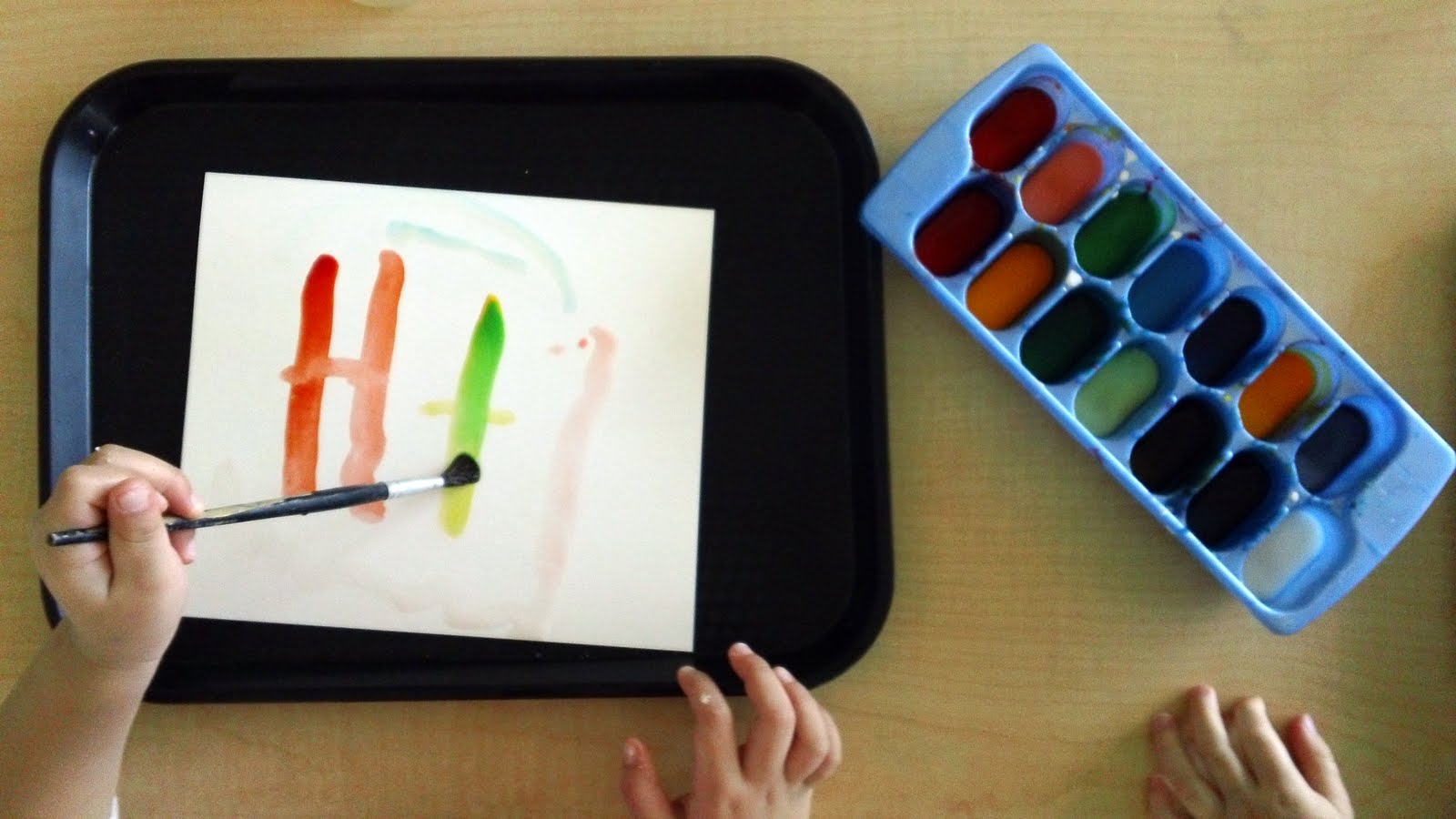
I have seen a few things here and there about homemade watercolors, and the time came this week to make some - we were desperate for them in the classroom!  I made them at home from a "recipe" that I found on Whole Living.


I had bookmarked the watercolors from One Golden Apple about a year ago, and I still plan to make those ones.  Those are a bit different, using Fantastix (which are sitting in my amazon cart right now), and we'll be trying those soon.  We'll probably use the ice cube tray again, putting a bit of color from a tube into each part of the tray.

Anyway, I made the paints at home and let them set overnight, and then the children used them the next day.  I was almost giddy when I saw the results!


The paints create vivid colors that drew the children in, some of them remaining to paint page after page .  One thing I have noticed with children and watercolors, especially twos and threes, is that they sometimes get caught up in the water aspect, ignoring or using a minimal amount of paint, and they disengage from their painting because they don't see anything on the paper.  With these paints, I showed them to the children at our morning meeting, making a few marks on the paper myself and modeling how I put paint on the bristles by swiping the brush back and forth a few times.  the texture of the paint deep in the pods is almost magic muck-like, acting like a solid until it is penetrated, and then allowing a paintbrush to dig in deep.  As the morning went on, more and more paintings had a bit of a grit to them, adding a bit of texture.


Overall, I love these paints, and I hope that you'll try them out, too, and let me know how it goes for you!  you can get the recipe over at Whole Living.  With small groups of children or classrooms with extra adult hands to work with a small group, I would definitely recommend making these paints with children, perhaps making them in egg cartons so that children can have their own set to take home.  


Related Posts Plugin for WordPress, Blogger...