Google+ bakers and astronauts: ramblings
Showing posts with label ramblings. Show all posts

13 March 2013

New to me Books (and why I chose them)

I love books.  New books, used books, antique books, children's books, novels, cookbooks - you name it.  We have moved quite a bit over the years and I think my book collection has been a reason that my husband HATES moving.  I'm not strong enough to pick up a box with 60 picture books, so that work falls on him and generous (and muscular) friends!  But we moved again a few weeks ago, and I have been so good about not buying books this past year, knowing our housing was relatively temporary.  But we've settled in, and I'm adding to my collection!

There was a library book sale, and I got lucky.  I had a $10 bill, and these books are just a part of what I walked away with (I'll be sharing the other half of my treasures soon)!


I'd like to share why I bought the books that I did.  There are so many books out there, and so many are not worth our time.  But wonderful books are so wonderful, they are like having 25 mediocre books.  And so...
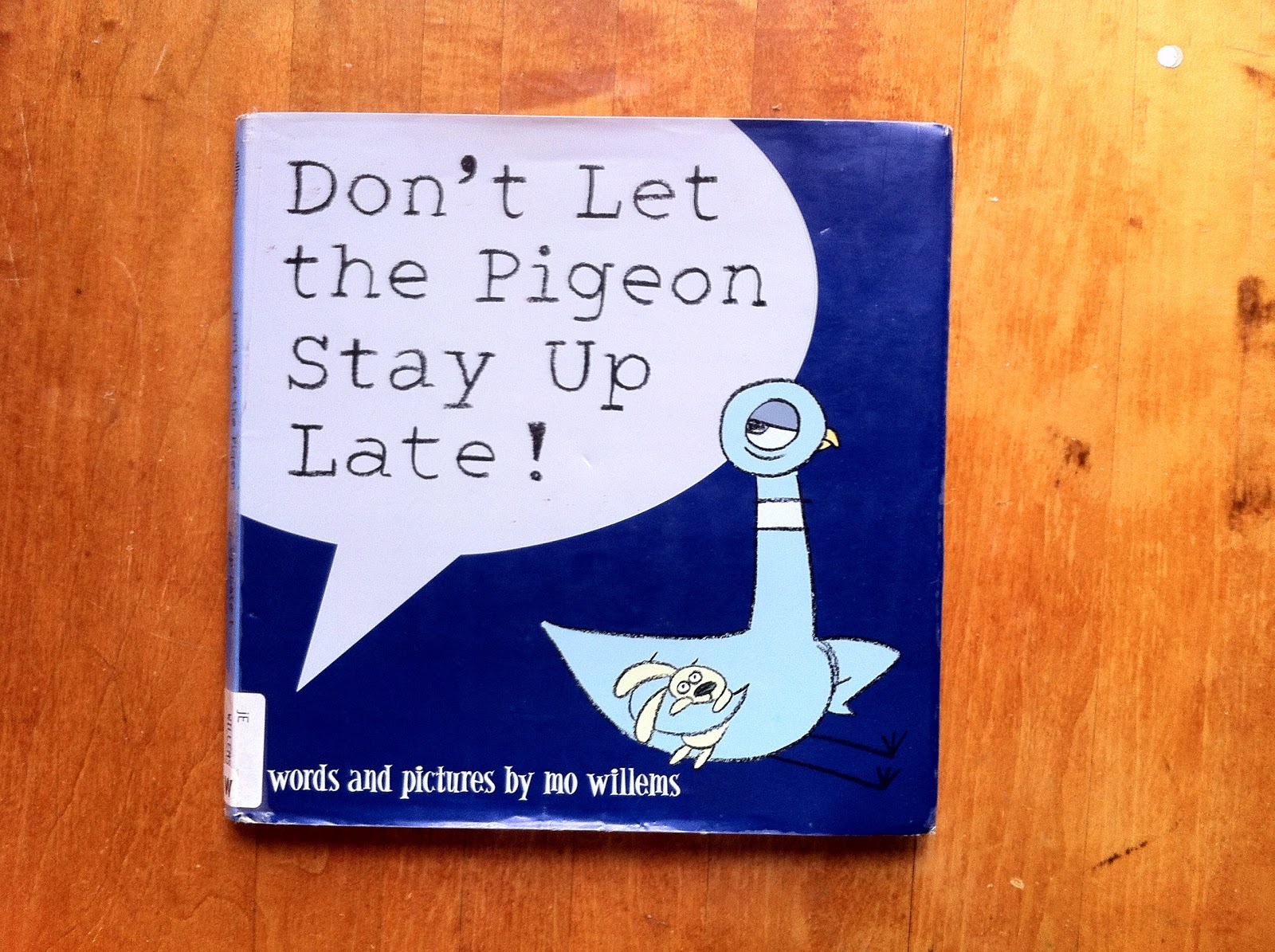


Don't Let the Pigeon Stay Up Late! by Mo Willems is the Mo Willems book I bought because it was the only one there.  I already own Don't Let the Pigeon Drive the Bus!, and it is a favorite of mine to use with preschoolers because it is so easy for children to interact with, and they often choose to read it to themselves.  This is a crucial step in early literacy - children retelling stories using bold and memorable images.  I also love the use of text boxes in this series, and in all of Mo Willems books.  I don't own any Elephant and Piggie books, but if there had been any at that book sale, they would currently be in my possession.


Herman and Marguerite is one of my favorite audio stories from Jay O'Callahan, and I had no idea that it was a picture book as well, with illustrations by his daughter.  I encourage you to listen to him tell a story - not Herman and Marguerite, but another excellent one - to appreciate him.  I don't think this book is in print, but you can find it on Earth Stories, and you can find it used on Amazon.  Rest time in your classroom will be amazing with Jay O'Callahan in charge.


Paper, Ink and Roller was not necessarily any new information about printmaking, but it is nice to have images of the tools and processes for a little inspiration from time to time.  I can also imagining showing this to children and having them choose printmaking techniques that interest them.


Boing! is a picture book that has interesting illustrations, and stars an accessible superhero.  That has early childhood written all over it to me.


The Crane Maiden is a retelling of the Crane Wife, a Japanese folktale.  The illustrations are beautiful, and in my opinion, the more fairy and folk tales I have around the better.  It doesn't hurt that The Decemberists wrote beautiful songs that are based on this story.  This is an example of a story that has been told many ways, and having a collection of a few to compare and contrast would be a great conversation starter.


Nina Crews' High, Low, Near, Far, Quiet Story is a fantastic book that uses photography to illustrate different concepts.  But Crews does this without making it too simple - she uses photographs that children can relate to and talk about.  I have a soft spot for Tana Hoban, so it is not hard for Nina Crews to wiggle her way in!


Finally, Audrey and Don Wood's retelling of Heckedy Peg.  What a book!  The illustrations are gorgeous and interesting (see a theme amongst these books?), and the story of Heckedy Peg is like the mother of all fairy tales for children to see and hear.  There is a creepy witch who scares children and turns them into food - that is some serious drama for kids!  It is a bit dark, and you may need to cuddle during the first reading, but then Heckedy Peg will be a classroom staple.


Are you familiar with any of these books?  What are your standards for the books that make it back to your house from the bookstore or library?

25 February 2013

Treasure!

This is a beautiful thing to find in the storage space of your new apartment:  a handmade trunk, covered in an interestingly patterned fabric.


I was happy enough to find it because we need a new ottoman, and buying a new one just isn't very interesting to me.  But the fun did not end at interesting fabric and a place to rest my feet...


It is filled with handmade blocks.  There are a few lincoln logs (the old wooden ones!) and some dowels, but this is basically a mix of squared off pieces of wood.  


I've long thought that I want a big bowl of legos on my coffee table - If I can ever snag some used ones, it will still happen.  But now, when I, or anyone in the house for that matter, is looking to play, we'll just open up the magic trunk!


I have a feeling you'll be seeing these far too much in this space!  Its playtime!

10 January 2013

New Years Rulin's


I came across this somehow - Woody Guthrie's 1943 New Years Resolutions.  I haven't really been one for New Years Resolutions - I feel like any time is fine to make a change.  But this sketch reminded me that we don't need to make grandiose plans - we can make small ones, and thats okay.

I want to write here, and sometimes in 2013 that will be once a month, and sometimes that will be 3 times a week...who knows?

I want to connect with more early childhood educators, be it through commenting or email or Google+ Hangouts or even (gasp!) face to face conversations.  I feel a certain side business and my day job pulling me from thinking about ECE everyday, and that is not my thing.

I want to get back into a job with the under fives set.  The coolest set.

I wish you all the best this year, or any day or year for that matter.  Thanks for reading!

07 July 2012

On Teaching "Content"

In my new role as an educator outside of a traditional classroom setting, I am teaching children about gardening and nutrition.  This is the first time I have had a focus in my teaching, and it is a learning experience for me to think about the "stuff" that I need to deliver to kids.

I'm not struggling with the idea that teachers do deliver content.  But in my experience, I have planned environments and exploratory experiences for children and then observed and supported as they interact with prompts and people.  Even with preschool "content", like phonemic awareness and numeracy skills, children gain that knowledge over time with exposure to great stories, well planned free play environments, and teachers finding the moments to make those connections.  Content in this setting has been known to include worksheets and posters.

A day like Thursday, at our summer camp, found me sharing baby turkeys with the children and answering questions about them.  I'm thinking about how I feel about this shift.  It is an important part of what I will be doing for the coming year.


I've made lesson plans, and I have followed them.  Before now, my lesson plans were about the materials and how they might be presented and what I as a teacher might focus my language on.  Jumping into this work in the garden, I find that I need to convey specific information rather than focus on exploration.  For example, while looking at eggs that turkeys hatched from, children have questions about everything possible.  The way that the planning has been in the past does not necessarily allow for long periods of exploration, and with something this "scientific, there are lots of facts and we want the kids to gain some understanding of that.


There is a lot of value in children holding baby turkeys.  They have curiosities, and I'm happy to share my understandings and knowledge.  I suppose what I am more used to is children with more open ended materials, and me using my language and resources to support those explorations.  When I have a big poster in front of a group of kids that shows the different parts of a worm's body and we're talking about what worms do for the earth, things don't feel so open ended.


Something for me to remember is that I am still helping children learn.  I'm also not trying to meet any standards or benchmarks with this content.  And just because this is the way that teaching has happened in this garden in the past does not mean that it needs to be static.  I was brought on because I am a competent teacher.  I might still need to teach about worms, seeds, plant parts, and baby animals, but I think that a shift can be made to include more exploration and scientific thinking on the children's parts, rather than me delivering knowledge.


It is not my role to make the curriculum, but I can help with best practices.  I believe in the power of play and exploration, and I imagine that this older crowd might not always get those experiences in their classroom.  Its time to plan for more exploration and experimentation.


06 March 2012

Mary, Mary, Quite Contrary

I'm not good at keeping secrets, especially really exciting ones.  I'm happy to share something happy with you - it will definitely be dictating the subject matter on this blog very soon.

It has been less than a year since we returned from Belgium, but we're already on the move again.  This time, we're heading back north to Washington: to Bellingham, north of Seattle and just a bit south of the Canadian border.

And I already have work waiting for me up there: I'll be working as a Seed-to-Table Education Coordinator for Common Threads Farm.  I'll have hands-on work with their school garden collective; I'll be working to coordinate volunteers and plan fundraising; and (most importantly), I'll be up to my elbows in mud, growing food with children and harvesting it and cooking and eating with children.

So, my apologies if I'm a bit absent from this space as I finish my thesis and we move yet again.  In the meantime, you can look over at my growing pinterest board on my new work subject.

11 November 2011

Expectations, Power, and Facilitation

I'm noticing some trends in my posts.  I'm clearly thinking about power and engagement.  Those are things that are an umbrella over every moment I have as a teacher.

Last week, I talked about expectations.  We need to suspend those as much as possible.  We can have inklings or guesses or pictures in our heads, but we cannot be frustrated when children approach something differently than we do.  We're adults - we've been in training for decades, and we are creatures of habit.  Just the other day, I had put up the children's names next to a sign up sheet at the easels - we are embedding more name writing into out days, and signing up for popular activities is a way to make those marks.  One girl walked up to the list, dipped the paintbrush into the orange paint, and basically highlighted her name on the list of names that was thee as a reference.  Why not?  She saw her name and painted on it.  And in her mind, it is a valid way to show that she wants to paint.  Her name is literally covered in paint.

As teachers, we can have ultimate power if we want it.  Children also know how to get the power if they want it.  We all have our ways.  I have my agenda, and each child has their own as well.  Who am I to say that mine is better?

You can picture a room where children are doing whatever they want - jumping up and down on tables, painting on the floor - whatever.  The classic image is from Miss Nelson is Missing:


That is one extreme.  The other extreme is children being forced to do things that they are not interested in at all.  But most of what happens is somewhere in the middle - especially when it comes to preschool.  There is no one way for it to look.  I've never had two environments that were set up just the same; I've never dusted off last year's planner and put it all into action again; and I've never expected one group of children to be the same as another one.  Not only would that be boring, but it would make teaching monotonous and repetitive.  

I like that children paint in random places and have different funny names for the baby dolls and a million different stories to dictate.  But I also like the common things that children do on their own, without instruction from me.  Play dough with popsicle sticks always turns into a birthday cake, three-year-olds always draw people like tadpoles, and four-year-olds put more weight on the word "friend" than any other word they know at that point.  Our job is to connect with children and make decisions based on that, with the input of the children.  We can try to make all the decisions as teachers, but it is not going to work.  But we have to facilitate and stay sane.  The better we are at seeing and listening and adjusting and listening some more, the better the experience is for the children.  I am thinking about preschool, but this probably applies to education in general.

I do not claim to be an expert at this - I'm writing about it because it is a challenge.  We need to be able to work with children, not create a free-for-all.  There would be no point in school if kids just ran around.  That middle ground is my ultimate goal.  Children engaged in the things that interest them, and teachers facilitating that work to help build on it and make it deeper and more meaningful.  Some might call it the Project Approach, some might call is Reggio Inspired, some might call it unproductive.  Call it what you wish.  Engagement might be children in a forest Kindergarten, children conducting science experiments, painting planks of wood, or making bread.  All of those things are able to happen because adults facilitate them.  

I'll end this rambling with a quote from The Hundred Languages of Children that describes the curriculum of the early childhood centers in Reggio Emilia: 

 "The curriculum is not child centered or teacher directed.  The curriculum is child originated and teacher framed." - Forman and Fyfe

Everyone in a classroom plays an important role.  And if we're teachers because we want to provide positive experiences for young children, that is exactly what we should do - and we should try to make those positive experiences engaging, explorative, meaningful, and personal.

08 November 2011

Productivity v. Chaos


I don't know if I've ever mentioned this topic before, but it is something I struggle with as a teacher.  Although I feel like I have learned quite a bit about teaching, there are days when I feel that I don't know anything.

The photo above was taken in the middle of choice time on Monday.  I have had some challenges with this particular group of children and engagement - it was a much bigger challenge three months ago.  But between how the classroom environment is set up, what materials and prompts are presented, and how those materials and prompts are presented, I find that children are getting into their work.  And the work that so many of them love is dramatic play.

I have written about dramatic play before, and I hope that we can have a conversation about it here.  I am proponent of open-ended materials for children - I want them to make their own decisions about what they want to work on.  I stopped setting up stores and post offices and doctor's offices in the dramatic play area years ago, and I have tried putting in open-ended materials : scarves, shells, rocks, squares of fabric, chairs and tables - I have made many attempts.  Nothing has been the picture of success that I imagined as I presented the materials.  More often than not, small items are put into bags or wrapped in fabric and carried around the room; unifix cubes become pet food and legos are poured into a construction helmet and become soup.  It is very imaginative, but it ends within 3 minutes for something that draws the children in more.

My desire to support the children in my classroom as they explore the world through dramatic play is a double edged sword.  Do I tell them what to play by providing an exact "play environment"?  I know they are playing and exploring using open-ended materials, but I feel that I can support them better.  My struggle right now is to find the middle ground between teacher-chosen prompts and open-ended materials that children are not drawn to as imaginative props.

Do you set up dramatic play for children?  If you do, is it a topic that the children have seemed interested in?  If not, how do you engage the children in the play?

27 October 2011

Ramble on

Sometimes, a teacher has a bad day.  It happens in any profession - things are a little off; a few things combine to make work harder for some reason.  If you're sitting at a cubicle, it might be a frozen computer or things on the wrong forms and the beginnings of a cold.  Whatever your job, bad days happen.

For me, today was a bad day.  I could even quote the title of this book as an example of what I mean.  It starts with no breakfast and an especially cold morning on the Oregon coast and escalates to paint everywhere and miscommunication with colleagues and a commitment that requires a 45 minute drive in the afternoon when still, nothing has been eaten yet.  I was really having a pity party today.  And when a teacher is having a pity party, it turns out things get even worse because selfishness is not a positive trait in a teaching and learning environment.  It makes things harder than you can imagine.  But most of you out there reading are teachers, so perhaps you can sympathize.

The point of the story, though, is what got me out of that funk.  First, I had to realize that I was throwing a pity party and being selfish, and the child who was dropping pumpkins on the ground to "see if they bounce" was not doing that to get on my nerves - it was nothing personal.  My attitude had created a touch of unproductiveness in the classroom, so I sat down and made some notes about the pumpkin experiment.  And when it broke, it went into the sensory table with our other pumpkins that we have been dissecting.  Problem solved.  I left school and stopped by home, where I cried about fairness and sadness and everything else I could think of that has been bothering me.  I got an excellent hug from my husband and he listened to my hysterical storytelling of my morning.  That helped.  Then I got in the car with an apple and a big bottle of water to drive to another school, where I was scheduled to do some schoolwork - an observation of a Kindergartener for a presentation on assessment that I'm working on this semester for grad school.  I listened to sad music and realized that was not helping, so I changed it and sang along to the radio.  I drove down the coast and saw big expansive views of the Pacific Ocean and literally let out deep, calming breaths.

Then I got to the school to find that there were no children inside; no teacher either.  I started to panic that my day was not on the up and up, like I thought.  But I saw some movement outside, so I went out to find the children collecting mushrooms in the forest outside their door.  They were putting them in paper bags, one "kind" of mushroom for each bag.  They were planning to bring them inside and classify them, sketch them, weigh them, and measure them.  I was given a bag and they asked me to join in.  So one hour after leaving work in a stressed tizzy, I was standing on a Pacific Northwest rainforest hillside collecting mushrooms, with the ocean roaring nearby and the care and affection of children right next to me.  I stayed with them until the end of their school day and said I would be back in two weeks - and one boy asked why I wasn't coming again everyday.

He didn't ask me that because he knows me as a teacher.  He did not ask me that because I am some fantastically phenomenal person, or a celebrity.  Maybe he just likes playing with pattern blocks, which we did while I was there.  But he was being kind and affectionate.  I thought that I was cured my the mushroom picking - but I think that statement really cured me.  Before visiting that school today, I had planned to spend the evening in bed by the time we hit morning snack.  But I am reenergized.  I'm humbled by children - right now it is that one little guy in particular - but it is the attitude that I need to start every day with.  Our job is about the care and nurturing of children, no matter what the situation. And with their attention and questions and eagerness, they are caring for us, too.

If you are still reading, thank you for letting me ramble.  And I would love to hear about your day, too.

19 October 2011

sketchbooks encore


We started using our sketchbooks on Monday.  The process of introducing them is something I always forget about - it takes scaffolding, explanations, answering questions, reminding children that they don't go home until they are full...


Although the children have been engaging with drawing and writing, it is not widespread.  The writing and drawing table is small and I don't think that the materials are presented in as engaging a way as they could be.  It is something to work on - but bringing sketchbooks into the mix is a way to promote drawing.  I think it is important for children to explore.  In my experience over the past few years, I think that children approach drawing in their sketchbooks as an experiment.  Each child's picture/scribble/letter/poked holes in the page will always differ from their neighbor's, and everyone quickly learns that its okay if it doesn't represent something, or if you can't label it.  We're just exploring.

On the first day, I showed the blank books at the start of the day and said that we would be using them right before lunch...every day.  When we cleaned up after work time, I put the books out and the children sat down and opened their books.  The prompt was to draw "anything".  Most children got right to it.  Some just looked at the book.  Some made a line and closed the book.  Some drew on every page.  We transitioned to wash our hands for lunch after sketchbooks, and some had to have numerous messages that we had to put them away soon.  This is a challenge I have had before.  If you type "sketchbooks" into the search bar on your right, you'll get some musings on how this has worked in the past.

On day two, the children were asked to "find the circle" in their sketchbook.  Some started drawing circles on the cover, one child ripped a page out of the book, others found the circle and started using it as a prompt for something"circle-like" (my expectation when planning the activity).  Most children used the prompt eventually.  Some just stared for the second day in a row.  

So, as we embark on our sketchbook journey once again, I'm giving myself a few tips.  First, these belong to the children and they should decide whether or not to follow the prompt.  In my experience, eventually, most will.  But they need time to explore what it means to have a sketchbook. I need to be patient.  Second, planning prompts on a regular basis is important.  We had lots of free draw last year, which was good, but some children, who would not normally choose to draw during work time, would make a mark, close the book, and move on.  Prompts helped.  Third, I need to observe and reflect on how this group uses sketchbooks to think about time.  How do we decide how long we work in them?  Does there even need to be a time limit?  This is something I've struggled with in the past.  Fourth, we need to make time to celebrate and share our sketchbooks as a group.  In pairs, in small groups, as a large group - the children's reflections on the experience can deepen the whole project.

Does anyone else use sketchbooks on a daily basis?  A weekly basis?

(I have used the UK project Sketchbooks in Schools for inspiration - I highly recommend it!)


19 September 2011

planning for engagement

I have been thinking about the level of engagement that the children have with their environment in my new setting.

What pulls children in?  What makes them choose an activity or material and really engage with it?

I think that children are engaged when they are the ones who choose the outcomes -  they can be finished quickly or linger on, depending on why they have chosen something.  We introduced a sensory table the other day, and eight children played with the sand for 30 minutes.  Part of that is novelty; part of it is true engagement.  Piles were made and destructed, animals were buried and unearthed, and some serious space negotiations happened.  Those kids were really busy.

The space is really really important - I feel like I've always known that, but it is so true right now.  The children don't need to be told what to do, but we (as teachers, parents, caregivers) need to throw out a few ideas and give options.  Children want to be quiet, loud, fast, slow, messy, and deliberate with careful actions, sometimes all within a span of 10 minutes.  And the right space encourages that in a way that doesn't make the adults want to rip their hair out.

We've added a bit of structure to the morning, none of which was there before, and that has been positive.  We sit down together twice - once at the start of the morning, and once before lunch.  We have been listening to stories and singing some songs; one day we drew self-portraits; another day we read Not a Box and then each child drew an idea for pretending with a box on a piece of paper with a square drawn on.  Over the past 4 weeks, my main goal has been to get to know these children and understand what to expect from them, the other teachers, the parents, and the culture of the school in general.  With that information, I can understand my role much more clearly.

I need to support the children as they engage in deep and meaningful play.  This involves so much - the environment, the materials, planning experiences, exploring alongside them, and listening.  I hope that I can listen and then use that information more purposefully than I have in the past.  I have a track record of listening and documenting and then ending up with folders full of photos and little projects that stopped soon after they started.  I've made a heavy goal for myself, but it is one of the most important ones I have made in my eight years of teaching.

10 May 2011

documentation and making it meaningful

This post at Beyond the classroom has me thinking today.  How do I document?  How do I respect not only the children's communication through words and visuals, but also through movement?  How can I make a continuing record to show what is valued by the children and the teachers in the environment?

For me, lately, it has been more than that, even.  How can I follow through with the children's interests?  How can I support them as they bring their explorations to the next level?  I begin the documentation, but then it falls short.


For example, weeks ago, I brought in a variety of things from m kitchen that may or may not grow.  Dried garbanzo beans, caraway seed, fennel, lentils, sesame seeds, and more.  I put them on a table with lots of containers and magnifying glasses.  I was there from time to time, talking to the children about sorting.  There were also small cards on the table and black pens, and I occasionally prompted the children to draw their predictions of what different seeds might look like when they grow.

Reflecting on the experience now, I do understand what I could have done differently.  This could have been separated over more days; it could have been in a format where it was facilitated by an adult with small groups of children - an atelier type setting, really.  I did not write down any words, and no one drew a picture.  After this day, the children helped to plant the seeds, but I did not have them follow up in any way besides the obvious watering and using the plants for observational drawings as they grow.

Every moment is not going to be recorded, and I see a beauty in that.  But I do see how I need to improve on my practice of documentation.

15 September 2010

"Areas"

I have been trying to step back from my preconceptions about how the classroom environment needs to look or act.  This is important because of our multiage aspect; but I'm realizing that it is something I should always do.  Where did I get my ideas about the setup of the classroom?  What can happen there and what can't happen there?  What it is supposed to offer?

Through observing and student teaching in college, I absorbed unspoken messages about the classroom.  No matter where I was, the typical preschool classroom always had a home area, painting easels, a block area, a bookshelf, a sensory table, and perhaps a table for art and messy things.  So my first classroom had all of these things.  And sometimes the home area became something else, like a post office or a doctor's office.

I don't think there is anything negative about this classroom setup. I think it does work for children.  My classroom right now has all everything described, save the dramatic play area being more open-ended.  But I'm really wondering if these areas are so necessary.  The children have been showing me different ideas over the past two weeks.

For example, two of the girls enjoy dramatic play, but apparently not the setting.  So they take a large basket, pack it up with everything they want from the dramatic play area, and take it all over the the piano, whch they like to it under and play "sisters".

The construction in the room is constant, and the block area is very popular.  There is not quite enough space for children to really do what they want; things are always getting bumped and buildings cannot be as big as some want because of the floor space.  I'm also interested in how their block constructions can be extended with paper and pens, fabric, tape, and more.

There is not as much drawing and writing happening, and there is a table in the room dedicated to that all of the time.  Last year's group was all about writing, and this year is a bit different.  Those materials do not seem to get used as much.

I know the importance of structure in the room and in the day.  But these rules about the classroom aren't set in stone, are they?  It's easy to fall into a habit - every teacher knows that.  But I think things could be a bit more interesting if we broke that habit.  I haven't really branched out as much as I would like to when it comes to creating an inviting environment for the children, and perhaps that's because I've been so focused on ME and the environment and what I am going to do.  Just as I try to follow children's interests and support their explorations, I think I need to look to them and figure out what they need from the environment. 

That is a big part of my journey this year.  How can the environment support our work and play?

12 September 2010

Two weeks in

We are already about two weeks into the school year, and I have only made one post here about our work so far.  I have been trying to be more organized in the classroom, and trying to work in a way that allows me to spend most of my time on documentation and scaffolding children's inquiry.  We are not into child-centered inquiry too much yet, but our focus on community is beginning, and the children are settled enough that we can begin some conversations and representations this week.

There are a few things on my mind this week that I hope to use this space to work through.  They include documentation, the classroom environment, and the multi-age aspect of the classroom (which I am beginning to think of as "family style" - it best reflects what it represents, in my opinion).  Those are big focus areas for me this year.

So bear with me as a ramble and babble this week and possibly all year.

01 September 2010

The Rookie

My husband is using his spare time to listen to the entire This American Life catalog.  I'm not sure how he chooses them, but we just listened to "The Rookie", a story by Adam Gopnik reads from his book, Paris to the Moon.

In "The Rookie", Adam, a North American, is living in Paris and realizes his son has never experienced baseball.  And so he begins telling him the story of the rookie at bedtime.  His son creates his own images along with the words, and then begins to demand very non-baseball things from the rookie (such as having a time machine in his suitcase). 

I felt a real connection with the piece, and it was a bit of an eye opener for me.  What do we assume children know?  When do they have to create their own understandings?  I think its an important thing for young children to do - to work through possibilities and gather clues - and it is something that really defines the potential of this time in their life.  How can we celebrate those moments and those inventions, and how can we make them more meaningful?  What do our students want to know, and where do those curiosities come from?  Where can we take them without taking away the natural ideas children have connected with a concept?

Have a listen to the audio on This American Life.  And of course, please, share your thoughts.

15 July 2010

A few random things

With all of my relaxing and taking time for myself and wandering around Paris, I have been pretty absent from this space.  And to be honest, I think I'll keep it like that for a few weeks.  My mind will start racing as soon as I open the door to my classroom again.

But I do have to mention that I finally got to meet another fantastic person because of this blog.  Jolayne writes Urban Preschool, which was a big inspiration for me when I started this blog.  I even emailed her to ask for advice at the start.  We had lunch and took a long walk, talking about Early Childhood Education and much much more.  I'm happy to know her in real life now!


And I realized that I have been writing this blog for three years two years (I got a little ahead of myself yesterday).  That's (still!) a long time!  It's exciting for me to actually follow through with something rather than just getting really excited and then abandoning it when it gets difficult or challenging.  We would want our students to persevere, so we should too.  Maybe I'll think of a way to celebrate three two years of perseverence!

I hope everyone out there is having a beautiful, relaxing, delicious summer.

29 June 2010

Sketchbook Reflection

One of the big changes I made in the classroom this past year was initiating our daily sketchbook work.  We continued the work from the first day to the last, with some children filling up a dozen books and others working painstakingly on one.

When looking back on the practice, a few things jump out at me.  First, there were days when we were a little pressed for time, and we did not let the children finish their work and invited them to "finish it tomorrow".  Why?  Is our morning group time so pressing that a child can't finish their own work?  Most of the children would hear us start to say hello and close their books, and some still needed a few more minutes.  I think this is a place for us to be more flexible.

Something else that struck me was how many decisions we made as teachers.  The materials we used; where the children sat; how long they had.  It was not as child-centered as it could have been.  In the future, I think the children can make decisions about the prompts and the materials just as teachers have been.

We would begin our day with free choice, and then stop for sketchbooks and meeting, and then go off to specials or to the forest, depending on the day.  I think that needs to be modified.  I would like us to begin our day with sketchbooks and then transition into our day together, with parents taking a minute to look at their child's work and for the child to share and then saying goodbye as the child gets into their work.  Unfortunately, because there is a large window of time when the children are dropped off at school (about 45 minutes some days), it is unrealisitic to expect that we will all be working in sketchbooks together first thing in the morning.

The children do enjoy the work, though, and I am looking forward to supporting them in it for another year.  And my hope for it is that it will become more child centered and help me, as a teacher, to discover more about each child as an individual.

25 April 2010

Back to School

Returning to the classroom after three weeks away is a strange feeling.  Especially when, during the third week, everyone else was there, and you were the only one gone.  I'm constructing a to do list for the week right now involving our inquiry, the classroom environment, and planning, and I'm feeling a bit overwhelmed.  But in 30 minutes, when the children come through the door, I think things will fall back into place.


Do you ever feel in a rut?  Even the very best teachers must.  What is challenging you this week?

13 March 2010


I cannot help myself from fantasizing about this:  researching and independently studying early childhood education on an island in the Pacific for three years.  I should probably get through my Master's first.

28 February 2010

New Friends

It is a cloudy, rainy, chilly day in Brussels - I won't make any judgements about this weather, though, because I'm trying to live by that mantra, "There is no such thing as bad weather, just inappropriate clothing".  You can decide how you feel about cloudy, rainy, chilly days.

I'm glad that I put on my coat and went out in this weather, because I got to meet Lauren, and American teacher living and working in Lebanon.  She also writes the blog Voices, which is about her Reggio-Inspired classroom in Beiruit.  It's really wonderful to meet people face to face, have a warm drink and a croissant, and talk about Early Childhood Education and internet addictions.

So, I think I'd like to meet all of you - we may span the globe, but I'm sure there are times when people are in the same place. 

07 January 2010

Why There is Less Time to Write

I have always been able to find time to write here at least once per week.  I am hoping that doesn't go down with a big change in my life - I am now a Graduate student.

I am part of the very first Online Masters of Science in Early Childhood Education at the Erikson Institute in Chicago.  I never have to set my foot in a University classroom for this degree, which I think is good and bad.  For me, I am able to get my Masters degree while still working full time.  As long as I can manage my time, I can do my work whenever I please.  But I don't think I'll be able to create the personal relationships with my professors and classmates, and I think that is an important part of making a meaningful connection to my school work.

Four days in, I think I'm going to enjoy it.  But I also want to make sure I am still here, reading and writing and sharing, because this has become an important part of my teaching and reflective practice.  I'll be back to teaching on Monday, and I'll be sure to share the children's work as we start the second half of the year.

Happy Weekend!
Related Posts Plugin for WordPress, Blogger...