Google+ bakers and astronauts: literacy
Showing posts with label literacy. Show all posts

03 November 2012

Creepy Carrots

I ran an afternoon program at the farm on Wednesday afternoon, which just happened to be Halloween.  It is funny to be gathering eggs and herbs and making mini frittatas with seven year olds on the biggest candy day of the year, but we succeeded!  I linked the holiday to the garden using a read-aloud of Creepy Carrots! by Aaron Reynolds and Peter Brown.


While we were waiting for our eggs to cook, I prompted the children to draw their own scary vegetables.  They loved the prompt - and they began using alliteration to develop more scary vegetables, from scary sunflowers and terrifying tomatoes to zombie zucchini and lurking lettuce.


It had been a while since I was able to create a literacy prompt like this - and it was so engaging for the kids!  I hope to create a prompt like this every week of this program.


Do you have read-alouds that you love about nature or food?

19 July 2012

Great Books for Pretend Reading : Abiyoyo

Today I'd like to share another great book for pretend reading : Abiyoyo.


Abiyoyo, is a retelling of a South African Folk tale by Pete Seeger, and even without the beautiful paintings by Michael Hays, it is a gripping and exciting story for little ones.  The story is funny, scary, and has a happy ending.  The language is memorable, as are the characters, and the simple and original phrasing makes it a snap for children to try out themselves.


Pretend reading can manifest itself in so many ways, from a two-year-old flipping the pages of a book to a four-year-old repeating memorized phrases to a five-year-old starting to use features of the text to begin to decode.  Abiyoyo is a book I have used successfully with threes and up, and when the book is left for browsing after storytime, it is constantly in someone's hands, with the story being retold.  Seeger uses memorable phrases, and keeps the text short and sweet.  Words like "ostracized" and "slobbery" and "foolish" become part of the retellings as children connect those words with images on the page.  The paintings are simple but set the tone for the book, and children are able to remember what is happening when because of the distinction between each page spread.

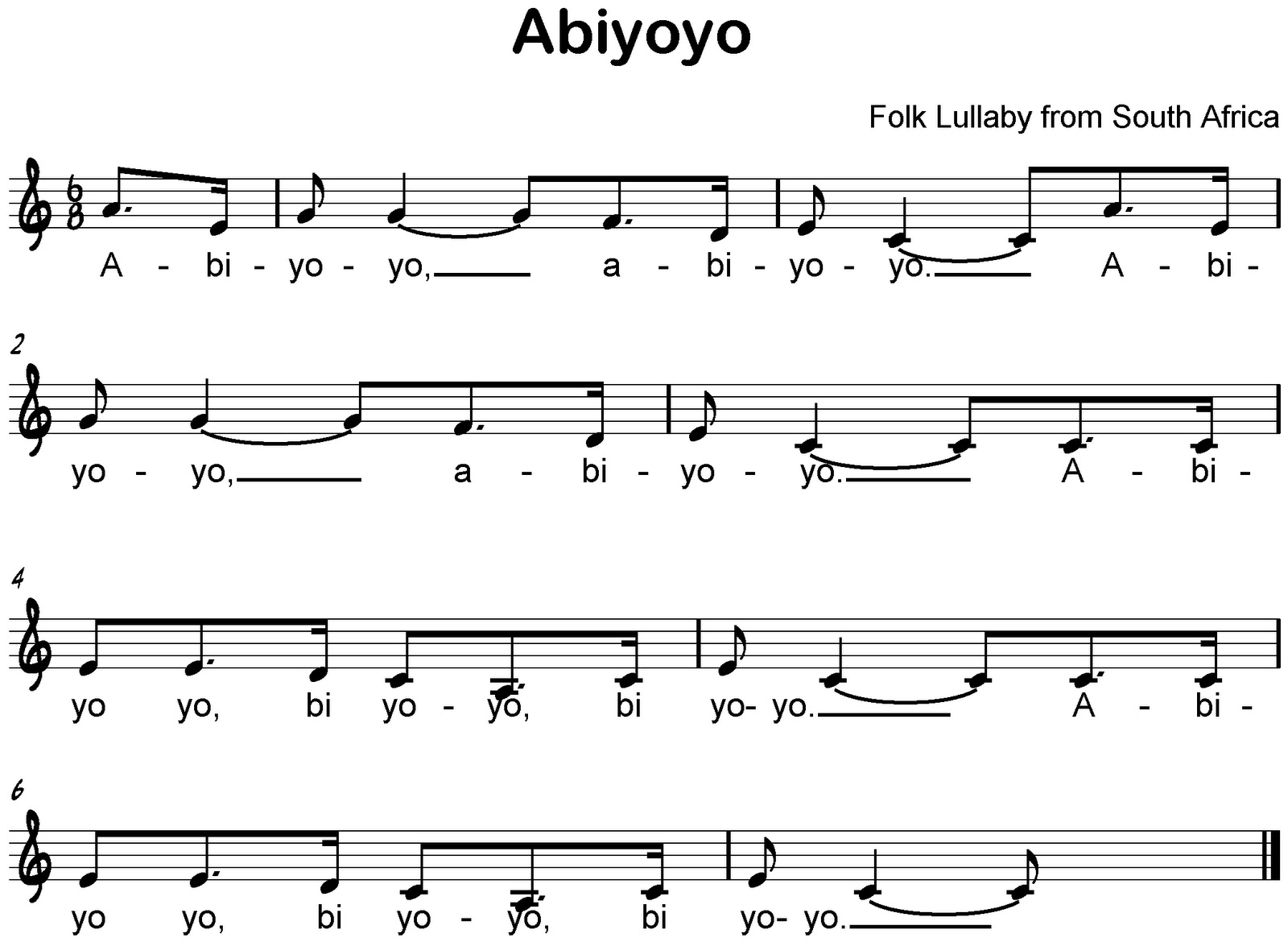
Another feature that makes this book exceptional, in my mind, is the music that is embedded.  Children learn a lot about literacy through being read to and exploring books independently, seeing text and understanding that there is a link between written and spoken word.  Symbols are an abstract, but to assist in bridging the abstract and the concrete, musical symbols are written in this book when the characters sing.  So children are able to make a connection between symbols and when it is time to read or sing.  And the song?  Impossible to forget!


This is a book that allows children to explore literature through pretend reading, and extend those explorations through music and play.  I myself have been Abiyoyo, chasing the villagers!  And to hear four-year-olds yell, "Grab your most precious possessions and run, RUN!" while scrambling across a playground cannot be a bad literature extension.  I rarely create extensions from the best books because the good ones do it for you.

I mentioned my love of Abiyoyo a year ago when I gave a copy away - and I'll likely mention it again. It is a book that everyone should have in their home or school library, and if you don't head down to your local library and see how wonderful it is.

I'm hoping that I'll be sharing books and ideas about literacy on a regular basis.  I'm not one for worksheets or craft projects or Baby Einstein, so I hope I'll be able to share information about how children learn about reading and writing, right within the flow of early childhood, not with outside pressure.


10 July 2012

Herve Tullet + Emerging Readers

While visiting a little shop downtown over the weekend, I came across the books of Herve Tullet, a French author and illustrator of children's books.  His books are simple and straightforward, and are books I can picture a preschooler engaging with easily.


The images do much of the talking, I think.  And in a recent series, Tullet is creating very interactive books, with textures and lines that draw a child in.  A book like that is likely to get a child's attention whether or not there is someone "reading to them".  When a child feels a certain amount of understanding of a story, we'll see them read books back to themselves; an important aspect of becoming a reader and a writer.

Herve Tullet

"having fun"


Press Hereis the perfect example of a book that a child might engage with independently.  When I think about wonderful children's books for independent exploration, I have a memory of the children in my classroom a few years ago taking turns reading Pete the Cat- this video is one of my favorite literacy moments.


Flipping through Tullet's books at that little shop downtown, and then rewatching the video, has inspired me to put together a list of great books for pretend reading.  I know that any book can inspire independent exploration and storytelling, but there are also some that really seem to speak to children in their own way.  A leveled "I Can Read" book rarely has the engaging content that draws a child in, and pretend reading is not about sounding out words - it is about understanding that text holds the same story with each retelling, that pictures and text carry information, and that text is related to spoken language.

I'm looking forward to making some book lists!  In the meantime, are there any books that you love to have around to inspire some pretend reading?


28 March 2012

extending illustrations

I just discovered the book talk blog from the Eric Carle Museum in Amherst - and I love their recurring "picture book puzzlers" feature.


(all images from The Carle)

I have spent a decent amount of money on picture books in my day, and I love reading aloud to children.  There are few things as engaging as a fantastic story told well.  And I think we can agree that it is important to foster a love of books.

The picture book puzzlers offer a pile of ideas for the classroom: using pictures as a prompt to talk about similarities between stories; having children "hunt" for pictures in a classroom, school, or public library; or using snippets of an illustration (a la Tana Hoban) to spark conversation and debate.

It is important to read books to children, but there are so many ways that we can use books to explore, expanding their possibilities.


27 September 2011

a wipe-off board and a typewriter


More tools to encourage the exploration of writing through play, along with some of the things children are making with them.

21 June 2010

Letter Making


Its the last week of school, and we are officially crazy for letters and symbols around here.  |About three of the girls are using everything they can find to represent letters.  I'm interested to see if this continues throughout the week.

17 June 2010

knitting needle letters


I saw this picture last week, and it made me think about how children learn - and the meaningful experiences children can have on the road to learning these academic tasks.  Earlier in the week, in the forest, one of the girls made her name with sticks.  We're not a class to trace letters or do worksheets, but letters are all around us all of the time and the children take a natural interest in text and print.  Once they discover that symbols convey a meaning, excitement follows.  I love seeing it, and I love this photo because of that.  I'll be sure to share our stick letters tomorrow.

16 February 2010

Chicken Cheeks

I seem unable to share anything except videos.  Chicken Cheeks looks cute, and Michael Ian Black clearly understands bottom-related humor that any preschooler would appreciate.  With pictures by Kevin Hawkes. Take a look...

01 December 2009

Writing

How can children communicate messages in writing?

What can writing look like at the age of four?

How do children understand the world of symbols and meaning, especially when they are exposed to multiple languages?

07 October 2009

How does writing look right now?

Right now, we are getting comfortable enough to encourage mark-making and writing to send a message. As three-year-olds, the priority is making sure no one touches your things when you go off to do something else.

That is a big big part of our writing throughout the year - hourly, daily, and weekly. Signs, notes, postings.


Related Posts Plugin for WordPress, Blogger...